
MindPour
A journaling app for emotional well-being
Context
Role
10 weeks
3 people team
Class project
User Research
Interaction Design
Prototyping
At-a-glance
Achieving emotional well-being is a challenging process, and one may feel overwhelmed and powerless in the moment without proper support.
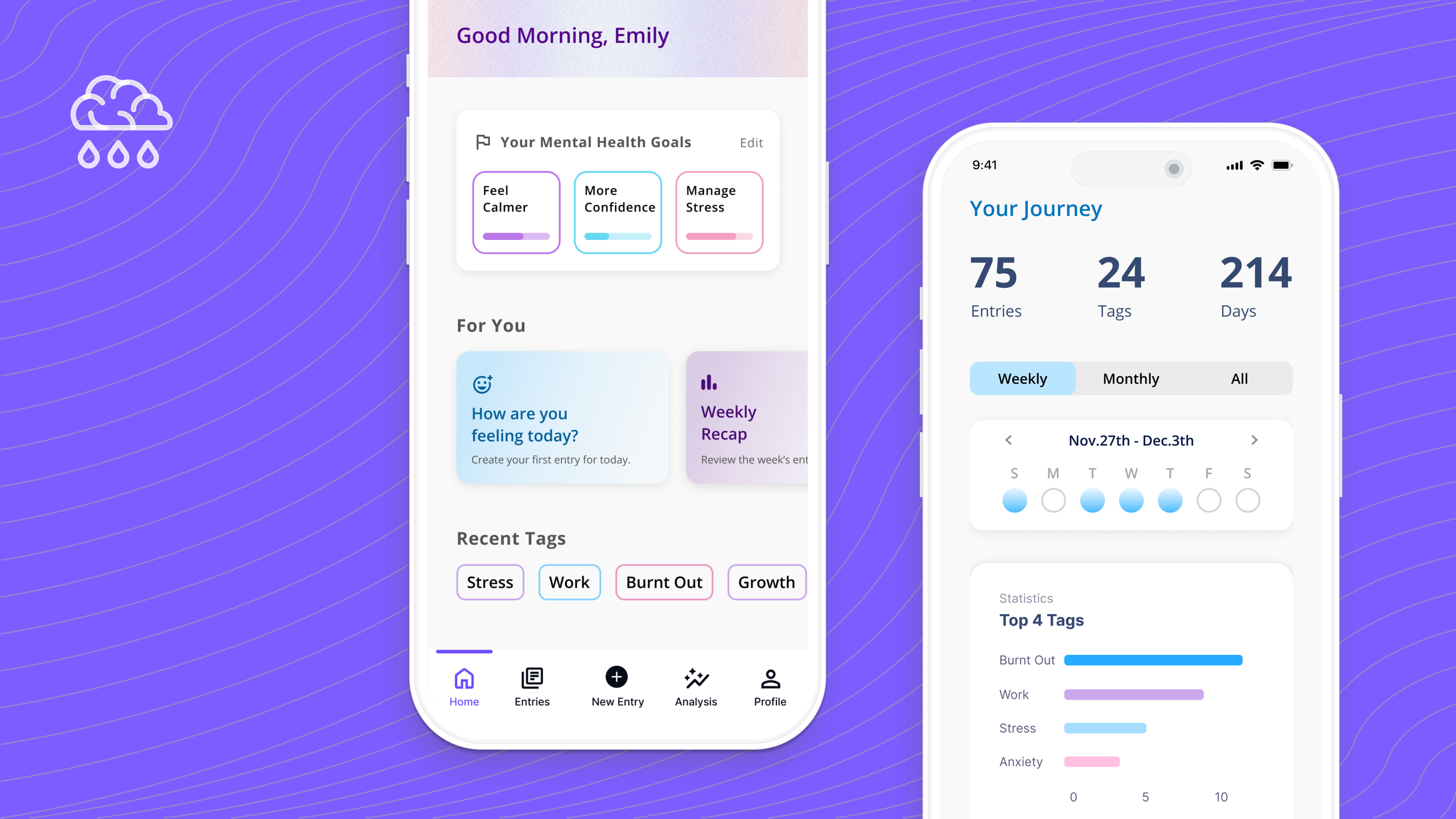
MindPour is an innovative journaling app designed to help people in their journey to better emotional well-being. Through features such as guided check-in and smart analysis, our app empowers users to gain a clearer perspective on their feelings, identify patterns, and make continuous progress towards a healthier state of mind.
The Design Process
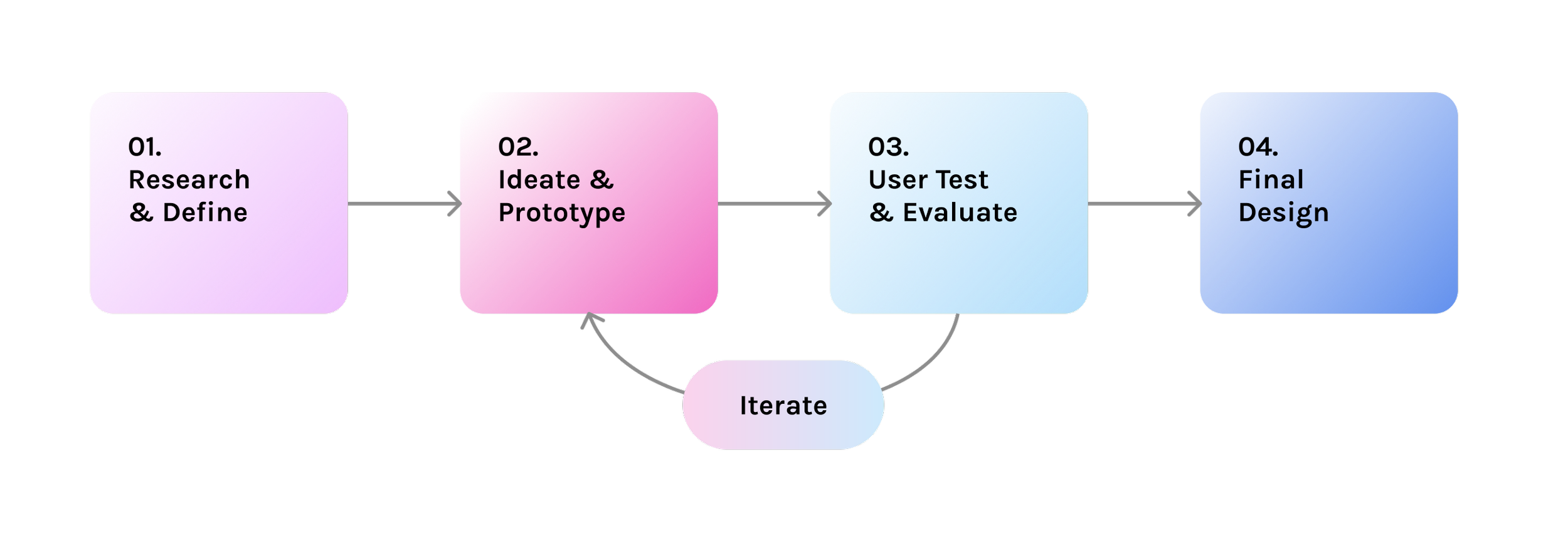
01. Research & Define
We began by exploring existing challenges in the field of emotional well-being.
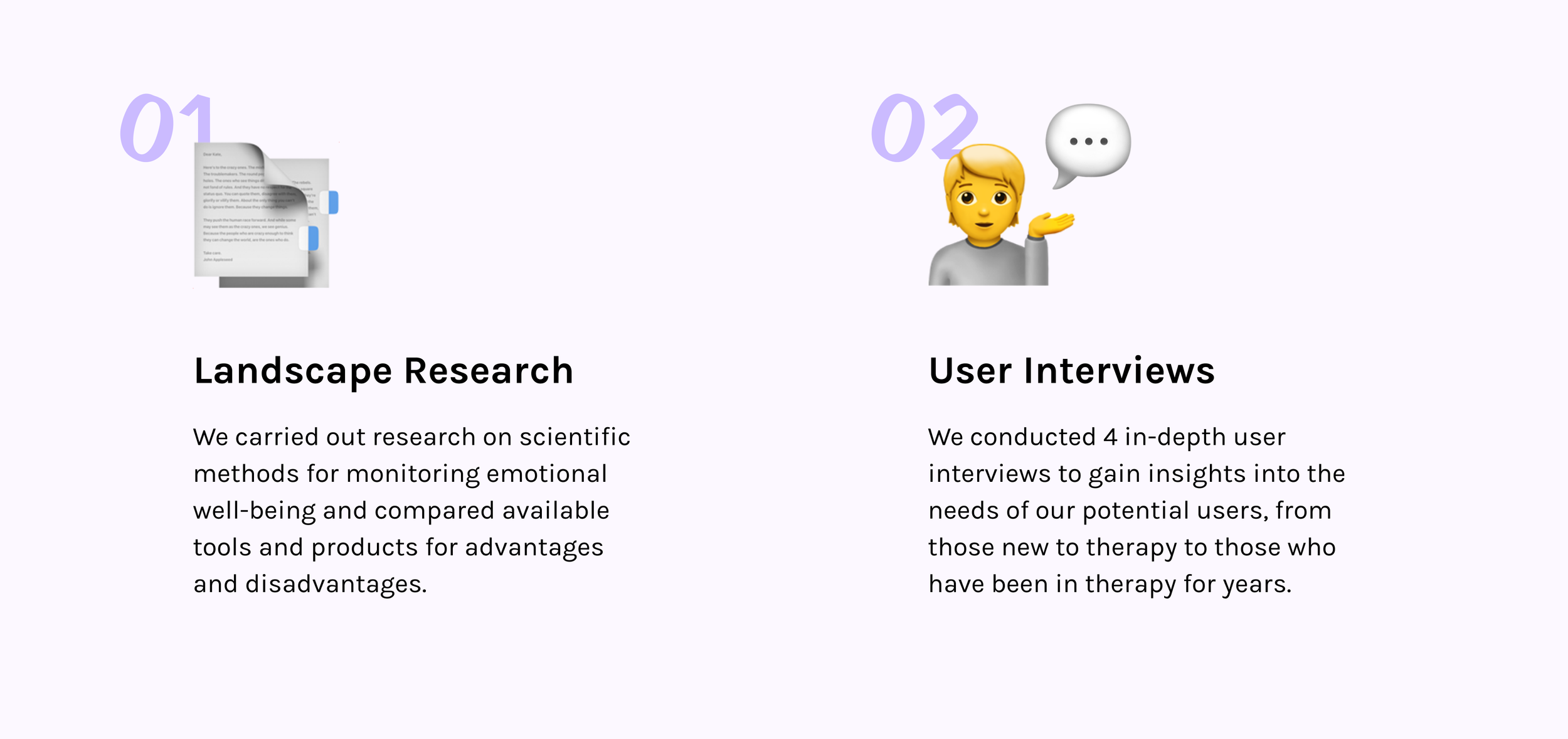
To identify potential opportunity areas, we conducted research utilizing 2 methods:
After synthesizing the information we gathered from the research phase, we summarized 3 learnings that helped us narrow the scope and better define our design problem.
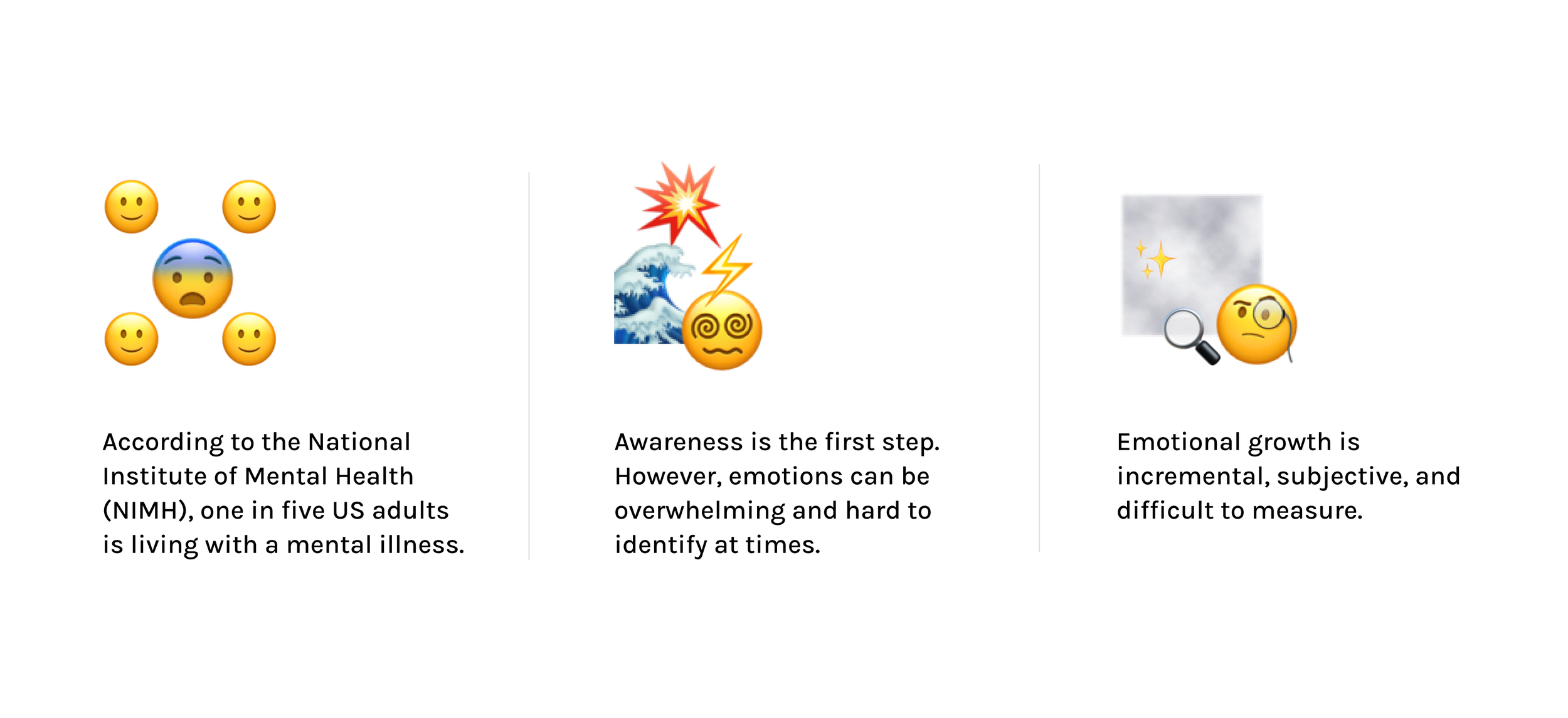
Understanding the Problem Space

The Design Challenge
How might we motivate users to improve awareness and recognize growth patterns in their emotional well-being?
Pain Points
Design Opportunities
To break down the challenge, we further identified 2 key design opportunities based on insights uncovered during user research.
Users struggle to recognize the fleeting emotions in the midst of their busy lives.
“Sometimes I get really frustrated at work but I don’t really have the time and space to deal with it. ”
How might we help users capture their feelings effortlessly and accurately?
Users become frustrated upon realizing that their journals repeat the same themes without their awareness during reflection.
“When I read my old journals, I realized I wrote about the topic but I forgot. It turned out to be the same theme over and over. ”
How might we assist users in proactively identifying recurring themes for better self-reflection and growth?


01
02
01. How might we help users capture their feelings effortlessly and accurately?
One important thing that we learned during user research is that people have diverse preferences for journaling emotions.
Some users prefer complete freedom, while others need guidance. Some want to journal quickly, while others prefer an unbothered environment to process emotions.
How do we design for everyone?
We mapped out potential ways of journaling emotions based on different user needs and ensured there are solutions covering all spectrums.
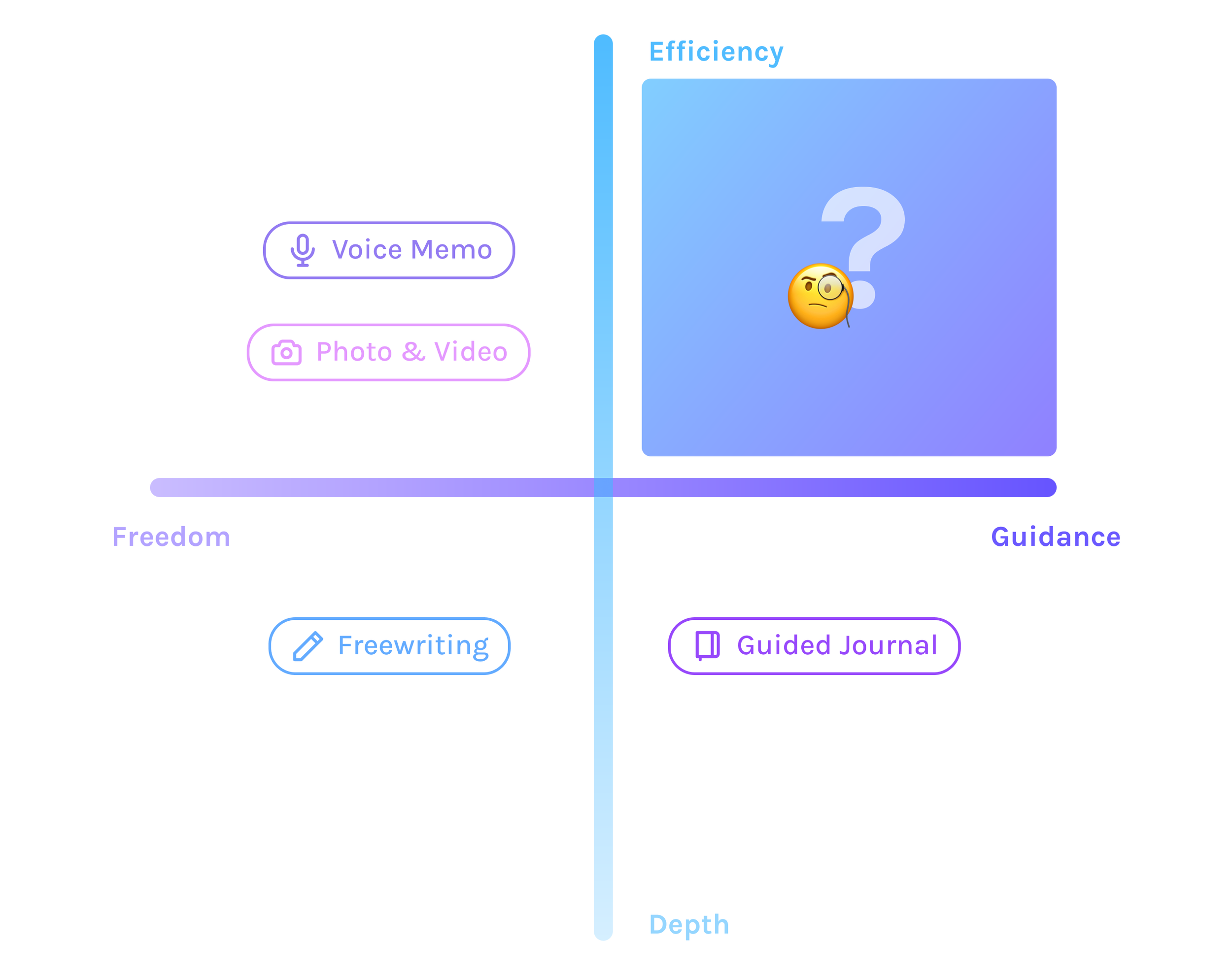
We discovered the "Efficiency-Guidance" space to be particularly intriguing as there appears to be a lack of effective solutions.
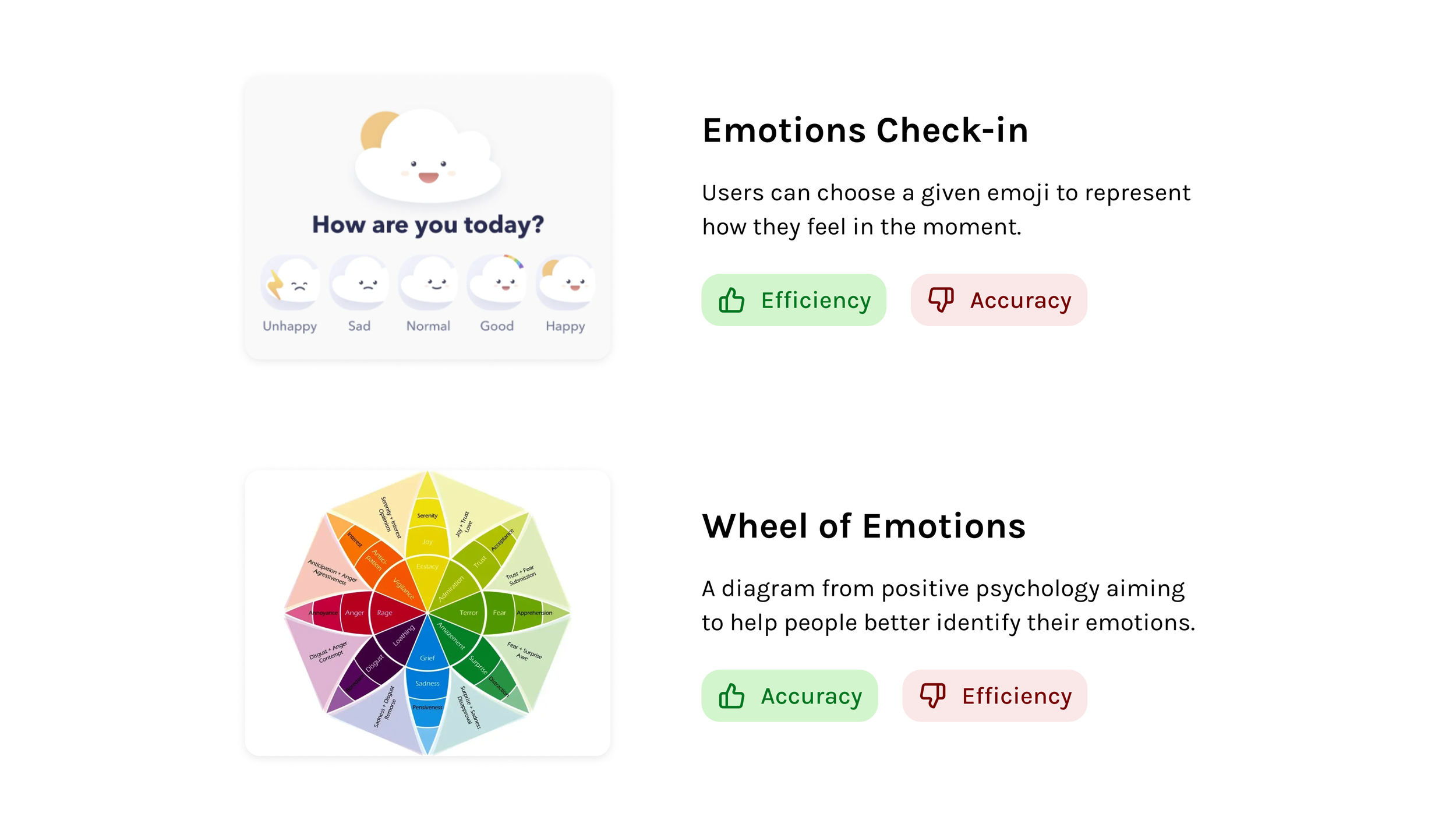
We explored a few different directions and conducted user tests to gain more feedback.
02. Ideate & Explore
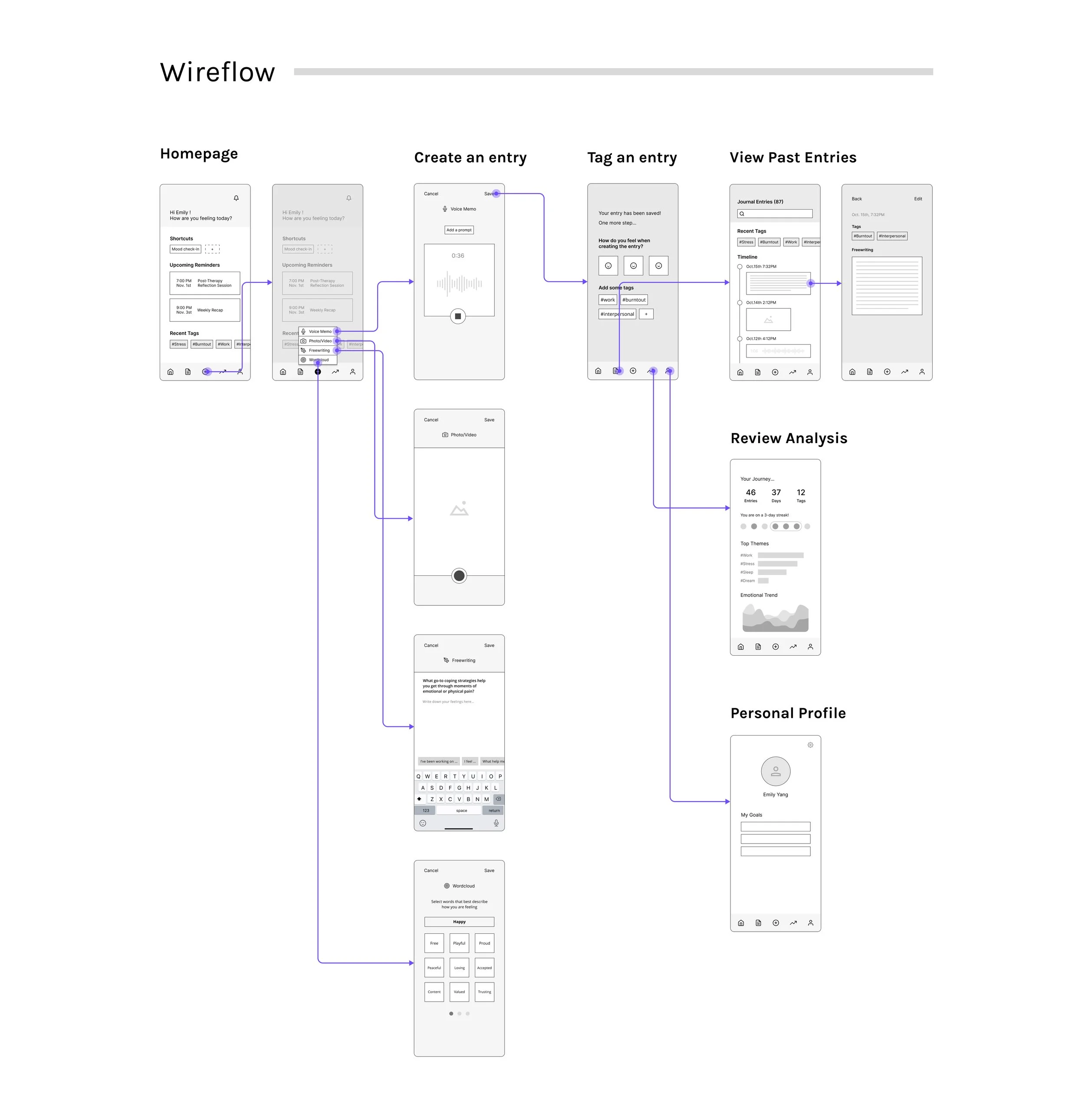
03. User Test & Evaluate
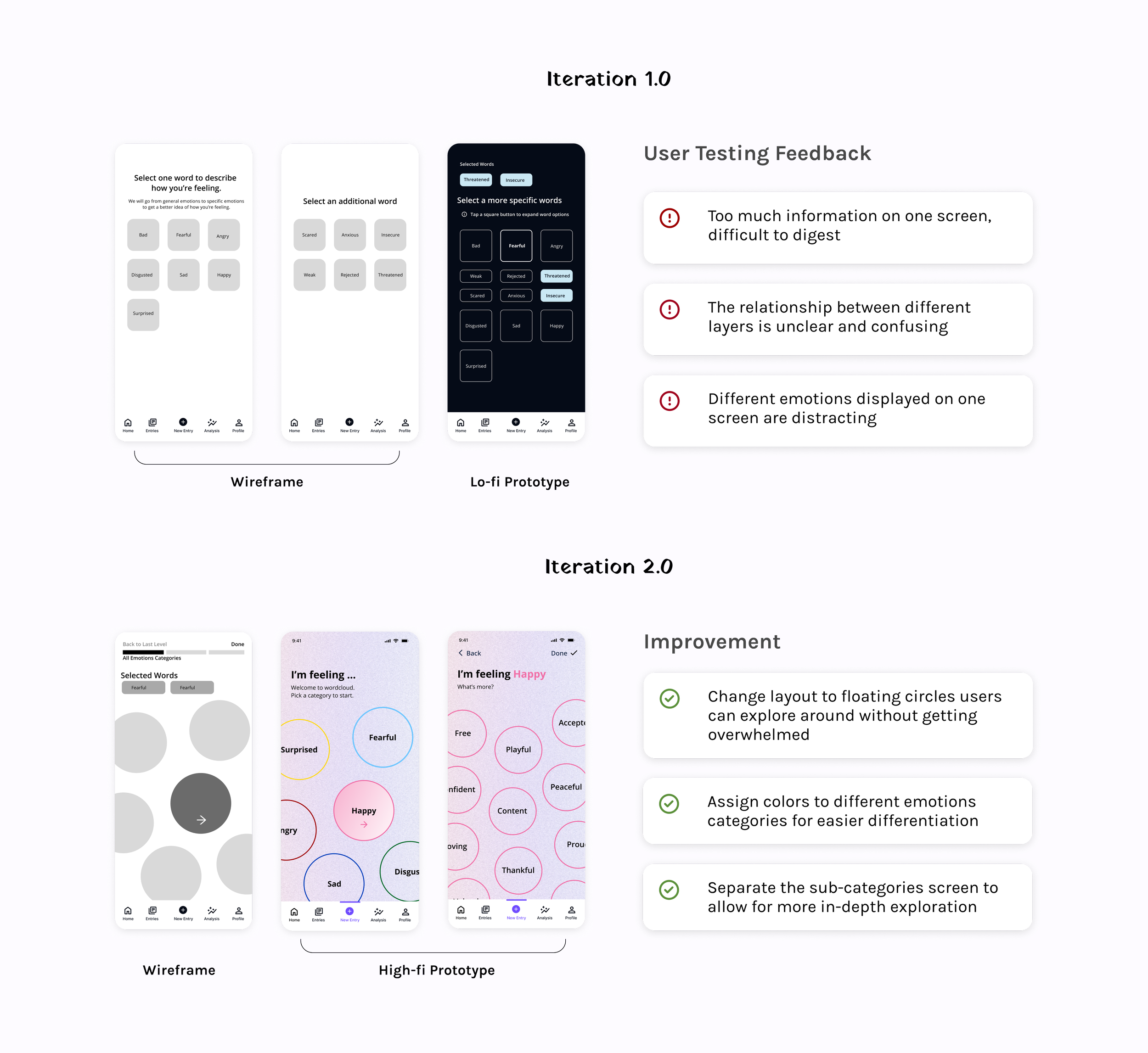
04. Final Design
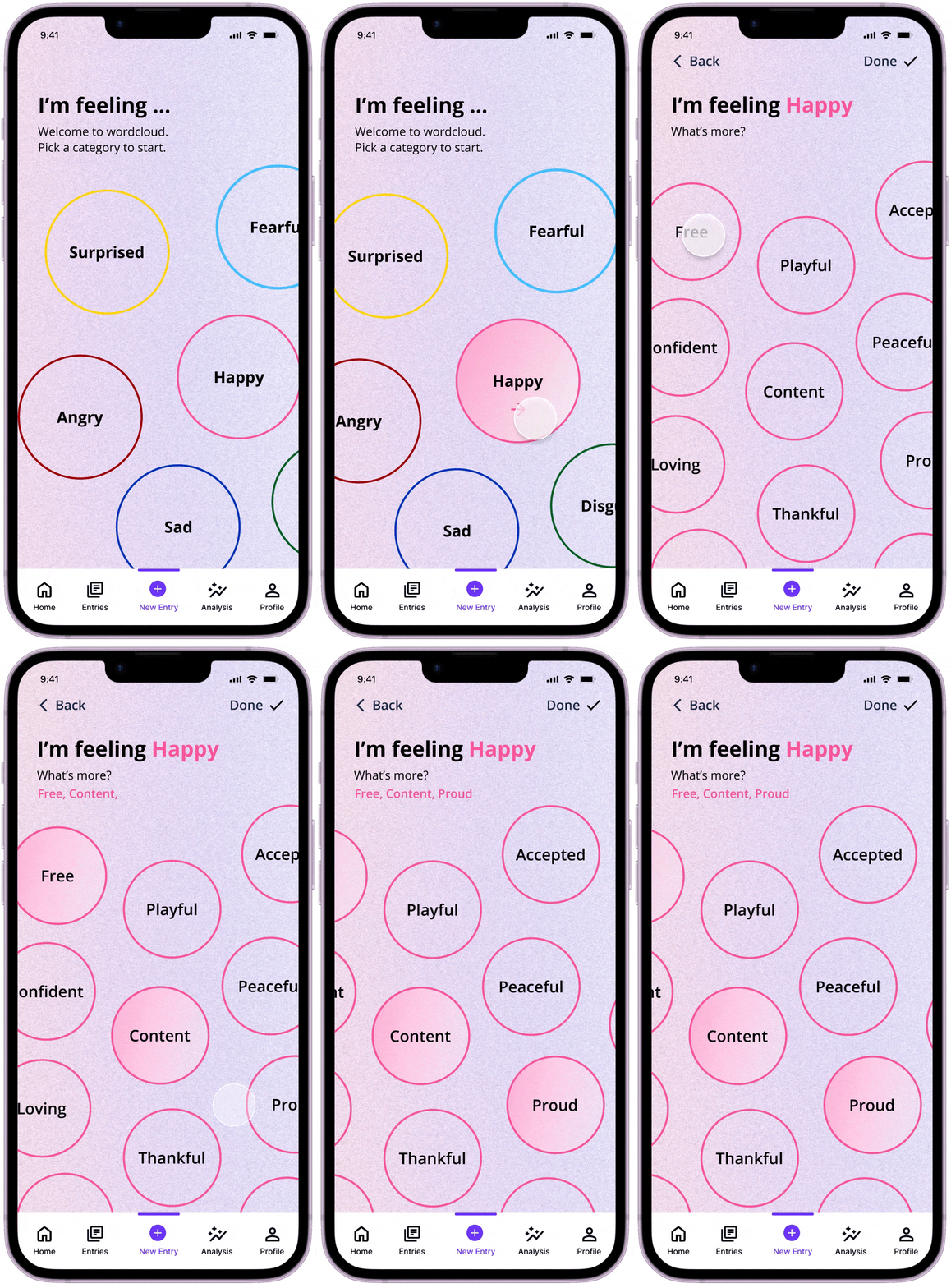
Quickly Capture Feelings in the Moment
01
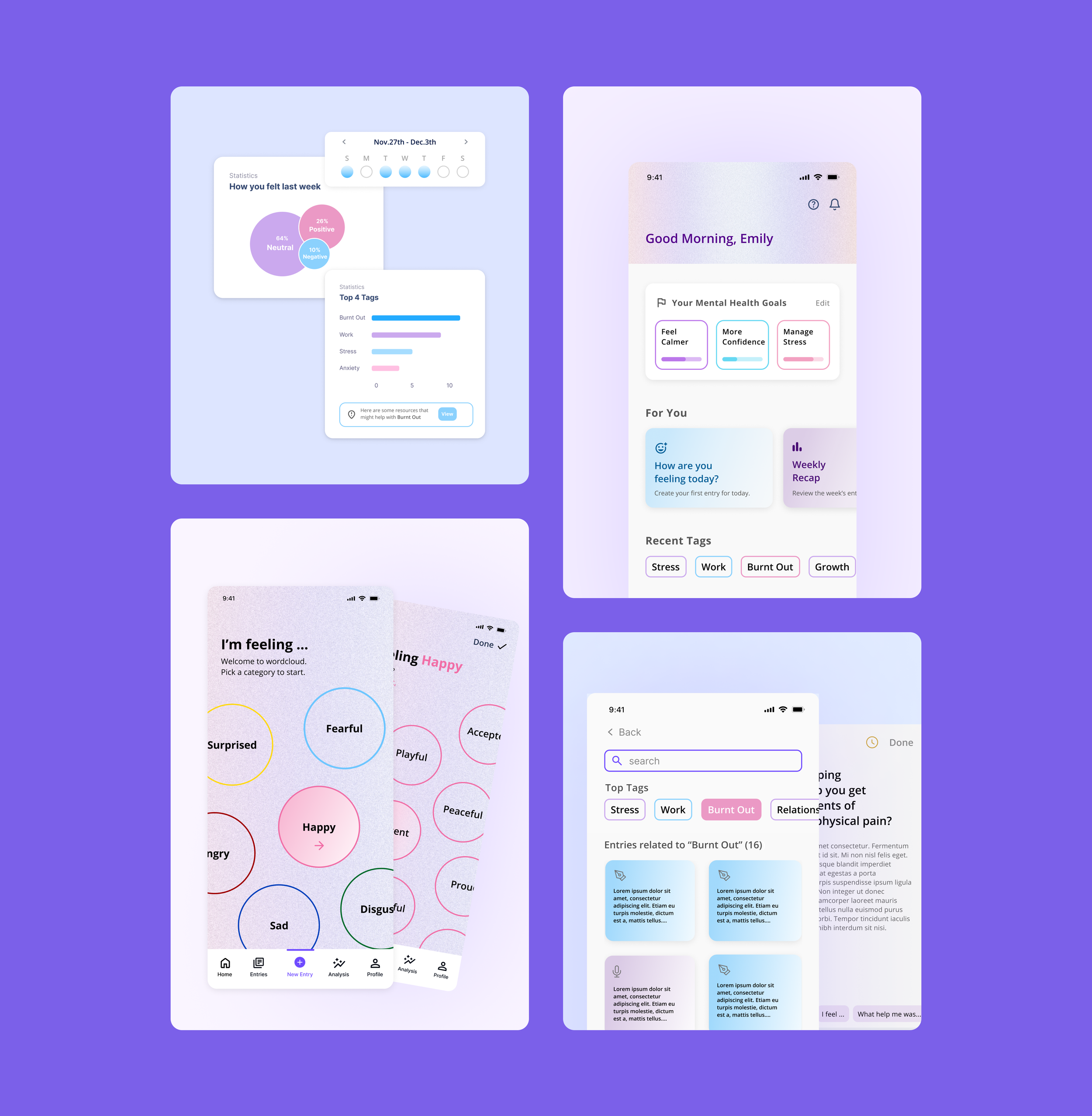
Identifying one’s feelings can be challenging. Interactive word cloud helps users capture their feelings intuitively and accurately.
Easily Categorize and Review Journal Entries
02
A tagging system allows users to categorize and review journal entries efficiently by themes.
Discover Emotional Patterns Over Time
03
The smart analysis feature analyzes user inputs based on tags and sentiment, alerting users to recurring emotional patterns they may not have noticed.
Lessons Learned
Navigate ambiguity through research and small experimentations
At first, the problem space we faced was broad, ambiguous, and intimidating. However, through conducting user research and prototyping small ideas, we were able to gain clarity on actionable areas and identify specific design problems to work with.
Embrace user diversity
During user testing, we found that individuals have diverse preferences for personal journaling. Rather than aiming for a right or wrong solution, we focused on accommodating different needs and ensuring that each user could find a way that best fit them.
Use design principles to guide decision-making
Receiving conflicting feedback from users can be challenging when making design decisions. However, design principles such as inclusivity can provide a framework for navigating these situations. When weighing different principles, it's essential to consider how each one will impact the user experience.